
4.4
2,100+ reviews on G2

A wedding ceremony is the part of the day where the couple marries. A common order is: guests arrive, the wedding party enters, the couple enters, the officiant leads the vows and rings, and the couple leaves together.
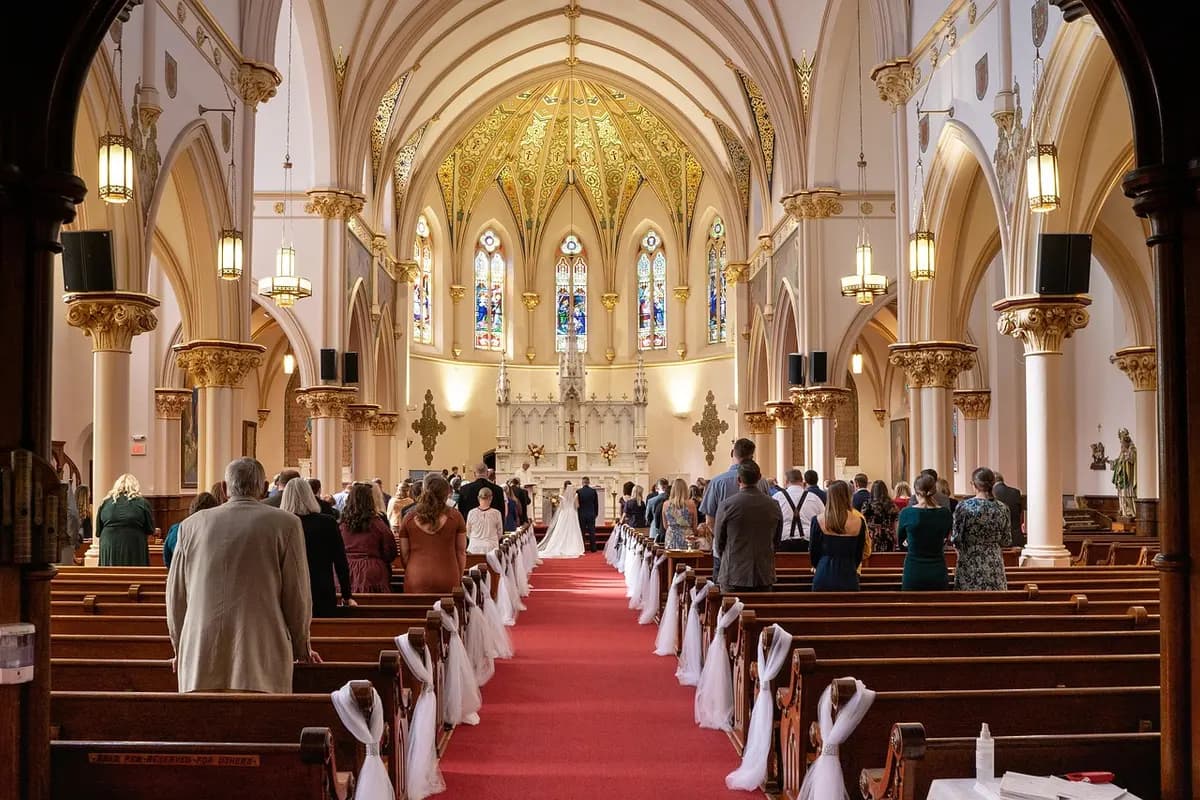
The officiant leads the ceremony and signs the marriage license with witnesses.
Processional, welcome, vows, rings, pronouncement and recessional.
Readings, music and unity rituals fit between the welcome and the vows.
The chapel ceremony in the example runs 45 minutes. Tell guests the start time and ask them to arrive early.
Keep the plan in Evernote. Share the checklist, ask your guest list, and find any term in a contract.
Pick someone who can legally marry you and who fits the tone. Confirm the fee, the license rules and the rehearsal.
List the processional, welcome, readings, vows, rings, pronouncement and recessional. Give each part a time.
Pick one piece for the wedding party, one for the couple and one for the recessional. Share the list with the musicians.
Check the local rules, get the license, and bring it to the ceremony. Confirm who signs as witnesses.
Walk the order with the wedding party and the officiant. Mark where each person stands and when each piece of music starts.
Times vary by culture, faith and venue. Keep the order and adjust the length.
| Part | What happens |
|---|---|
| Processional | The wedding party and the couple enter |
| Welcome | The officiant greets the guests |
| Readings | Family or friends read a passage |
| Vows | The couple says their promises |
| Rings | The rings are exchanged |
| Pronouncement | The officiant declares the marriage |
| License | The couple and witnesses sign |
| Recessional | The couple and party leave |
Source: Wikipedia, "Wedding" (en.wikipedia.org/wiki/Wedding), and The Knot ceremony guidance.
4.4
2,100+ reviews on G2

4.4
8,200+ reviews on Capterra

4.4
73,000+ reviews on App Store

248M
Registered users

The part of the day where the couple marries. The officiant leads the vows and rings, and the couple signs the license.
Processional, welcome, readings, vows, rings, pronouncement, signing the license and recessional.
The chapel ceremony in the example runs 45 minutes. Readings, music and unity rituals add time.
Rules vary by state. Ask the local clerk who can legally officiate and what the license requires.
Usually during or right after the ceremony, with the officiant and witnesses. Check the local rules.
It helps. Walk the order with the wedding party, the officiant and the musicians.
One piece for the wedding party, one for the couple and one for the recessional. Add a prelude if guests arrive early.
Yes, if the officiant and the local rules allow it. Keep a copy with the officiant.
Keep the order, the vows and the officiant contract in a shared Wedding notebook. Share the notebook with your partner and keep every note in one place.
Put each part and its time in a shared note. Ask the AI Assistant to turn the open items into tasks.
Keep the ceremony parts and times in a note. Ask the Assistant which parts still need a reader or a piece of music.
Attach the officiant or venue contract to its note. Ask "When is the rehearsal?" and the Assistant answers from the contract.
Share it with your partner, date every task from the wedding day, and find any term in a contract when you need it.
Start for free