
4.4
2,100+ reviews on G2

Learning drums means building steady time, hand control and coordination between your hands and feet, starting with a few rudiments and one basic beat practiced slowly to a metronome. Beginners start with four things:
Use a metronome to keep steady time.
Short sticking patterns build hand control.
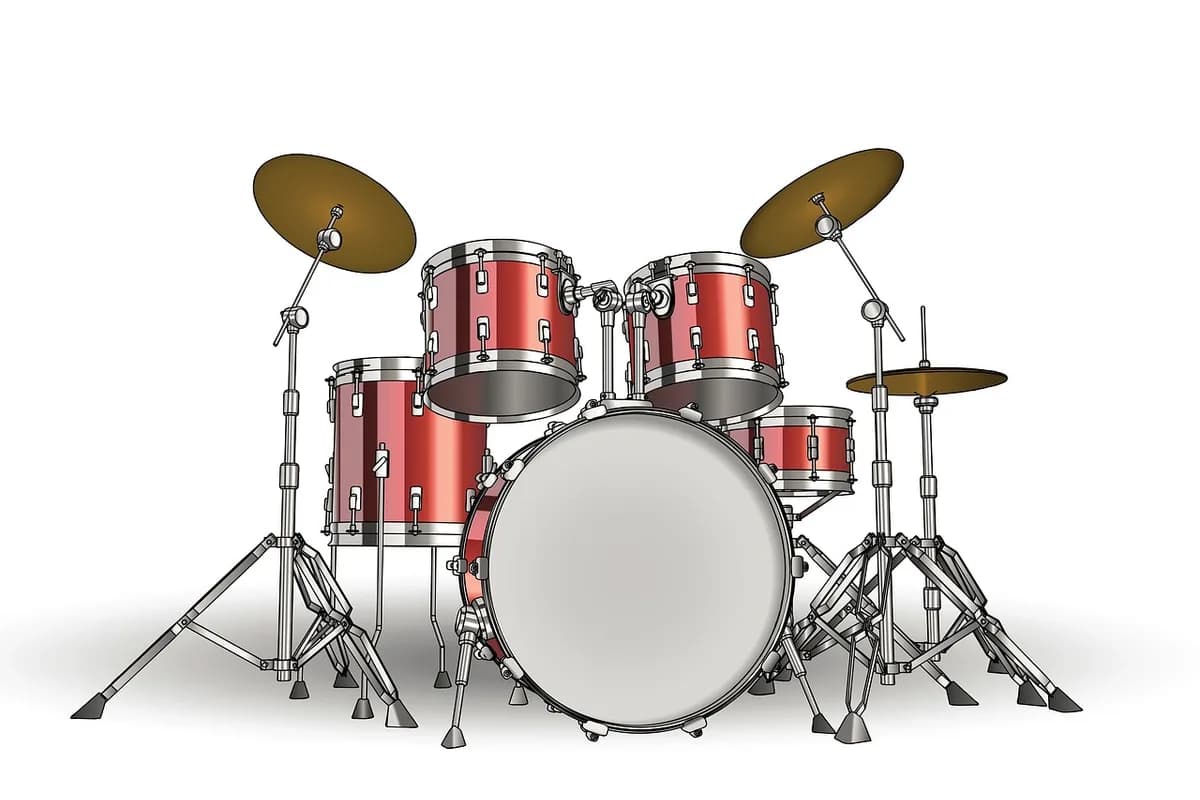
Hi-hat, snare and bass drum, counted out loud.
Speed a rudiment up, then bring it back down.
Keep your practice in Evernote. Record each session, log it, and chart your progress.
A practice pad and a pair of sticks are enough to learn grip and rudiments, and they are quiet. Hold the sticks loosely, so they bounce back off the pad.
The Percussive Arts Society lists 40 International Drum Rudiments. Start with the single stroke roll (R L R L), the double stroke roll (R R L L) and the single paradiddle (R L R R, L R L L).
Play each rudiment slowly and evenly to a metronome, speed it up gradually, then slow it back down. PAS calls this open to close to open.
Right hand plays eighth notes on the hi-hat, counted 1 and 2 and 3 and 4 and. Add the bass drum on 1 and 3 and the snare on 2 and 4. Learn the hi-hat alone first, then add one part at a time.
Pick slow songs with a clear rock beat and play along at their tempo. Keep the beat going even if you miss a note.
Record a minute of the beat and listen for uneven notes. When it sounds steady, raise the metronome a few beats per minute.
| Minutes | What | Tempo |
|---|---|---|
| 20-5 | Single stroke roll, R L R L | 70, then 90, then 70 |
| 25-10 | Double stroke roll, R R L L | 60, then 80, then 60 |
| 310-14 | Single paradiddle, R L R R L R L L | 60, then 75, then 60 |
| 414-20 | Basic rock beat: hi-hat eighths, bass on 1 and 3, snare on 2 and 4 | 80 |
| 520-25 | Play along with one slow song, record one take | Song tempo |
Rudiment names and the slow-fast-slow method from the Percussive Arts Society. Tempos are a beginner starting point.
Four of the 40 PAS International Drum Rudiments, chosen because beginner beats and fills use them.
| Rudiment | Sticking | What it builds |
|---|---|---|
| Single stroke roll | R L R L R L R L | Even strokes in both hands |
| Double stroke roll | R R L L R R L L | Two even strokes per hand, using the bounce |
| Single paradiddle | R L R R L R L L | Switching the leading hand |
| Flam | A soft grace note just before a full stroke | Control of two heights at once |
Source: Percussive Arts Society, International Drum Rudiments.
One entry per session. Copy it, or save it to your Evernote account and add a line each time you practice.
Date: [date] · Minutes: [how long you practiced]
Warm-up: [scales, stretches or drills, about 5 minutes]
Worked on: [piece, song or skill] · Part: [bars, verse or exercise]
Measure: [tempo, number of clean run-throughs, or pages filled]
Fix next time: [one thing, as specific as you can]
Recording or photo: [voice note or photo of today]
4.4
2,100+ reviews on G2

4.4
8,200+ reviews on Capterra

4.4
73,000+ reviews on App Store

248M
Registered users

Get sticks and a practice pad, learn a loose grip, and practice the single stroke roll, double stroke roll and paradiddle to a metronome. Then learn the basic rock beat on a kit.
Short sticking patterns that are the building blocks of drumming. The Percussive Arts Society lists 40 International Drum Rudiments, which include the traditional 26.
Eighth notes on the hi-hat with your right hand, the bass drum on beats 1 and 3, and the snare on beats 2 and 4.
Yes, to start. A practice pad covers rudiments and hand control, and you can tap the bass drum part with your foot. You need a kit or an electronic kit to learn the full beat.
Practice everything with a metronome, count out loud, and record yourself. Play slowly enough that every note lands on the click before you speed up.
Practice in short sessions most days. Split each one between rudiments, a beat and playing along with a song.
Keep a practice notebook with one note per session and one practice log note with a table.
Open a note for today, write which rudiments and beat you played and at what tempo, and add a voice note of one take.
Ask the AI Assistant to add today's session to your log note. It reads today's note and adds a row with the date, what you worked on, the minutes and the tempo.
Ask the Assistant to chart your tempo on each rudiment by week from the log. It adds a chart to the top of the note, so you can see the trend week by week.
Record or photograph each practice session, log it in one table with the AI Assistant, and chart your progress week by week.
Start for free