
4.4
2,100+ reviews on G2

Studying the Bible means reading a passage slowly and in context, noticing what it says, asking what it means, and writing down how it applies to your life. A study routine can rest on four habits:
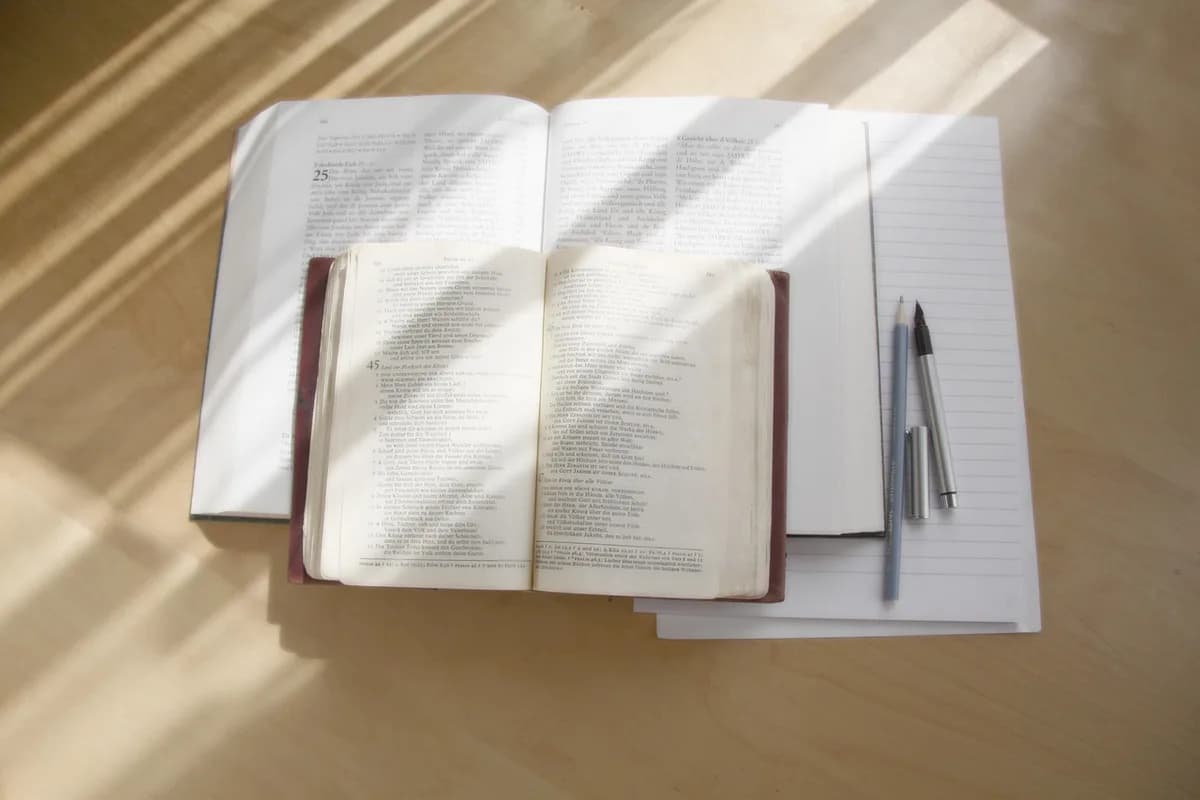
A short passage or one chapter a day.
What does the text say, before what it means?
The chapter and the book around the verse.
Notes, questions and what you will do.
Keep your study notes in Evernote. The AI Assistant shows the themes across your notes.
Pick a book and read it in order, one chapter or passage at a time. The Gospel of Mark, for example, has 16 chapters.
Read it slowly, out loud if you can. Copy the key verse or verses into your notes. This is the Scripture step of the SOAP method.
What do you notice? Who is speaking, what happens, what words repeat, what surprises you? Write down questions as well as answers.
Read the verses before and after, and ask what the passage meant to its first readers. A study Bible or your church's resources can help.
Ask what the passage means for your life this week, and write one concrete thing.
Close with prayer, in the way your tradition practices it, and reread your notes on the book from time to time to see the themes.
Mark 4:35-41 · The storm on the lake
"He awoke and rebuked the wind, and said to the sea, 'Peace! Be still!' The wind ceased and there was a great calm." (Mark 4:39)
This comes right after a chapter of parables taught from a boat. The passage opens with Jesus saying, "Let's go over to the other side" (4:35), and chapter 5 opens on the other side.
When a week feels like a storm, I tend to ask "don't you care?" This week: write down one worry each morning and bring it to prayer.
A short prayer about this week's worry. Theme to watch for in Mark: fear and faith.
The SOAP letters stand for Scripture, Observation, Application and Prayer. The context line is an extra step you can add.
Try one method at a time.
| Method | How it works | Good for |
|---|---|---|
| SOAP | Scripture, Observation, Application, Prayer, one passage at a time | Daily study, alone or in a small group |
| Inductive | Observe (what does it say?), interpret (what does it mean?), apply (what do I do?) | Careful study of one passage or book |
| Lectio divina | Lectio (read), meditatio (meditate), oratio (pray), contemplatio (contemplate) | Slow, prayerful reading of a short text |
The Salvation Army (mySalvos), "SOAP: Easy Bible Study Method"; Logos, "How to Do an Inductive Bible Study"; Cistercians of the Strict Observance (Trappists), "Lectio Divina".
One note per passage. Copy it, or save it to your Evernote account and use it every day.
Passage: [book chapter:verses] · Translation: [translation] · Date: [date]
Scripture: [the verse or verses, written out]
Observation: [what I notice] · [what repeats] · [my questions]
Context: [what comes before and after]
Application: [one thing to do this week]
Prayer: [a short prayer, in my own words]
4.4
2,100+ reviews on G2

4.4
8,200+ reviews on Capterra

4.4
73,000+ reviews on App Store

248M
Registered users

Pick one book, such as the Gospel of Mark, read one chapter a day, and keep a short note for each with what you noticed, a question and one thing to apply.
A simple four-step method: write out the Scripture, write your Observations, write an Application for your life, and close with Prayer. It works alone or in a group.
There is no single best way. A short daily reading in order, one book at a time, with notes, is one approach. Your church or tradition may also suggest a reading plan.
Different translations balance word-for-word accuracy and readability differently. Ask your church or group which translation they read together.
Long enough to read one passage slowly and write a few lines.
Read in context, observe before you interpret, write down questions, and come back to your notes. A group or a teacher in your tradition can help with difficult passages.
A slow, prayerful way of reading a short passage, described in four movements: reading, meditation, prayer and contemplation.
Yes. A group can read the same passage during the week and discuss it together. Methods like SOAP work for both individual and group study.
Write one note per passage you study, in a notebook for the book you are reading.
Ask the AI Assistant to add a daily task to read one chapter, at the time you choose. It repeats every day and reminds you.
Record your study group or a talk with the Evernote recorder. The transcript appears in the note, with who said what.
Ask the Assistant what themes come up across your notes on a book. It reads them all and cites the notes behind each theme.
Set a daily reading task, record your study group, and ask the AI Assistant what themes run through your notes.
Start for free