
4.4
2,100+ reviews on G2

The best way to train a pet is positive reinforcement: reward the behavior you want, and the pet repeats it. The reward can be a treat, a toy, or a game. Keep sessions short.
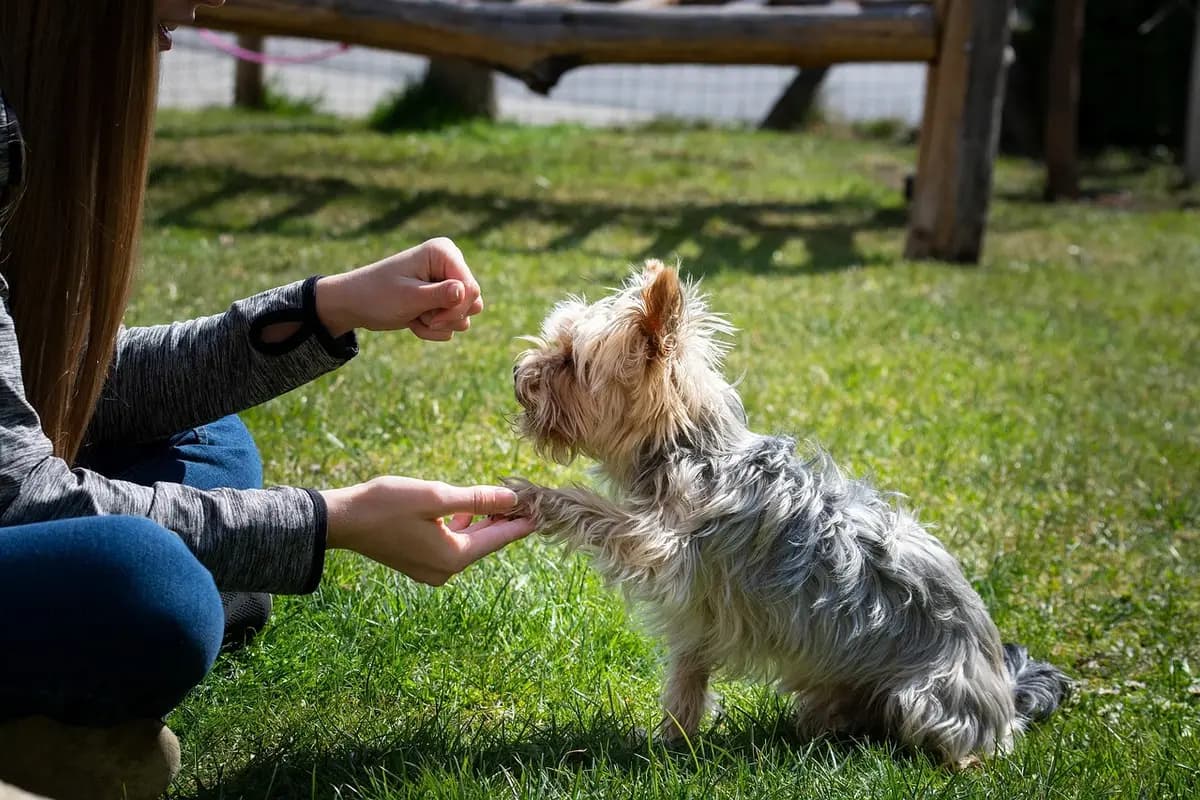
Mark the behavior the moment it happens, then give a treat, toy, or game.
A few minutes a day is enough to practice one behavior.
Name the cue, wait for the behavior, then reward.
Write the behavior, the reps, and the reward so you can see progress.
Keep training notes in Evernote. Add a photo, a task, and a weekly AI Assistant summary.
Choose a single cue to work on, such as sit, down, stay, or come. A clear goal makes it easier to see whether the session worked.
The reward could be a toy, a game, or a treat. Try a few options and keep the one your pet will work for without losing focus.
Say a short word such as yes, or use a clicker, at the exact moment the behavior happens. Then give the reward. The mark tells the pet which behavior earned it.
Keep a training session to five or ten minutes, and end on a success.
Say the cue once, wait for the behavior, then mark and reward. If the pet does not respond, make the task easier instead of repeating the word louder.
Add duration, distance, or a small distraction one at a time. If the pet struggles, go back to the last step that worked.
Write the date, the behavior, the number of reps, and the reward. Add one note about what was easy or hard, so the next session starts with information.
At the end of the week, look for a behavior that improved and one that needs work. Share the log with a trainer or vet if you want a second read.
Biscuit · small dog
| Day | Behavior | Reps | Reward |
|---|---|---|---|
| Mon, Nov 2 | Sit | 5 | Treat |
| Tue, Nov 3 | Sit | 6 | Toy |
| Wed, Nov 4 | Down | 4 | Treat |
| Thu, Nov 5 | Down | 5 | Game |
| Fri, Nov 6 | Stay | 3 | Treat |
| Sat, Nov 7 | Stay | 4 | Treat |
Sit is steady at home. Stay holds at 10 feet; the next step is a longer distance before we add the front yard.
The methods below all use the same principle: the pet gets something pleasant after the behavior you want. Choose the one that fits the behavior and your timing.
| Method | How it works | Best for |
|---|---|---|
| Positive reinforcement | Reward the behavior you want with a treat, toy, or game. | Sit, down, stay, and come. |
| Clicker training | Click the exact moment, then give the reward. | Timing and new behaviors. |
| Capturing | Wait for the behavior to happen, then mark and reward it. | Behaviors the pet offers naturally. |
| Luring | Move a treat to guide the pet into the position. | Sit and down. |
Sources: American Kennel Club guides to positive reinforcement, clicker training, and basic puppy cues.
Copy it, or save it to your Evernote account and fill in one row after each short session.
| Day | Behavior | Reps | Reward |
|---|---|---|---|
| Week of [date] | |||
| Monday | $ | $ | $ |
| Tuesday | $ | $ | $ |
| Wednesday | $ | $ | $ |
| Thursday | $ | $ | $ |
| Friday | $ | $ | $ |
| Saturday | $ | $ | $ |
| Sunday | $ | $ | $ |
4.4
2,100+ reviews on G2

4.4
8,200+ reviews on Capterra

4.4
73,000+ reviews on App Store

248M
Registered users

Positive reinforcement. Reward your pet for the behavior you want, and the behavior becomes more likely to happen again. The reward can be a treat, a toy, or a game.
Short. The American Kennel Club suggests five to ten minutes for puppy training sessions, and notes that just 15 minutes a day should maintain your pet’s good behaviors.
Not necessarily the same treat every time. The reward can be a toy, a game, or a treat, so you can use what your pet will work for.
A click marks the exact moment the pet does the behavior, and every click is followed by a reward. After about 10 to 20 repetitions, the pet learns that the click predicts a treat.
Reward a behavior you do want instead, and remove the reward for the behavior you do not want. For example, reward sitting at the door instead of jumping up. If the behavior is dangerous, ask a trainer or vet for help.
Practice in a few short sessions across the day. The American Kennel Club notes that just 15 minutes a day should maintain your pet’s good behaviors.
Yes. Use the same reward-based steps, start with a behavior the pet can already do, keep the session short, and raise the difficulty slowly.
Keep a log with the date, behavior, reps, and reward, plus one note about what was easy or hard. A week of entries shows whether the behavior is getting steadier.
Keep a training note in Evernote, log each short session with a photo, and ask the AI Assistant to sum up the week for your trainer.
Open the training note after each session. Add the behavior, the number of reps, and the reward, then attach a photo of the pet in the spot where you practice.
Ask the AI Assistant to add a daily practice task for the behavior you are working on. The task appears in the note with its due time.
At the end of the week, ask the AI Assistant to summarize the log: sessions, reps, what improved, and what needs work. Share the summary with your trainer or vet.
Log the behavior and the reward, set a repeating practice task, and review the week with your trainer.
Start for free