
4.4
2,100+ reviews on G2

An academic journal is a periodical that publishes research articles written by experts for other experts, after review by other scholars in the field. You can recognize one by four features:
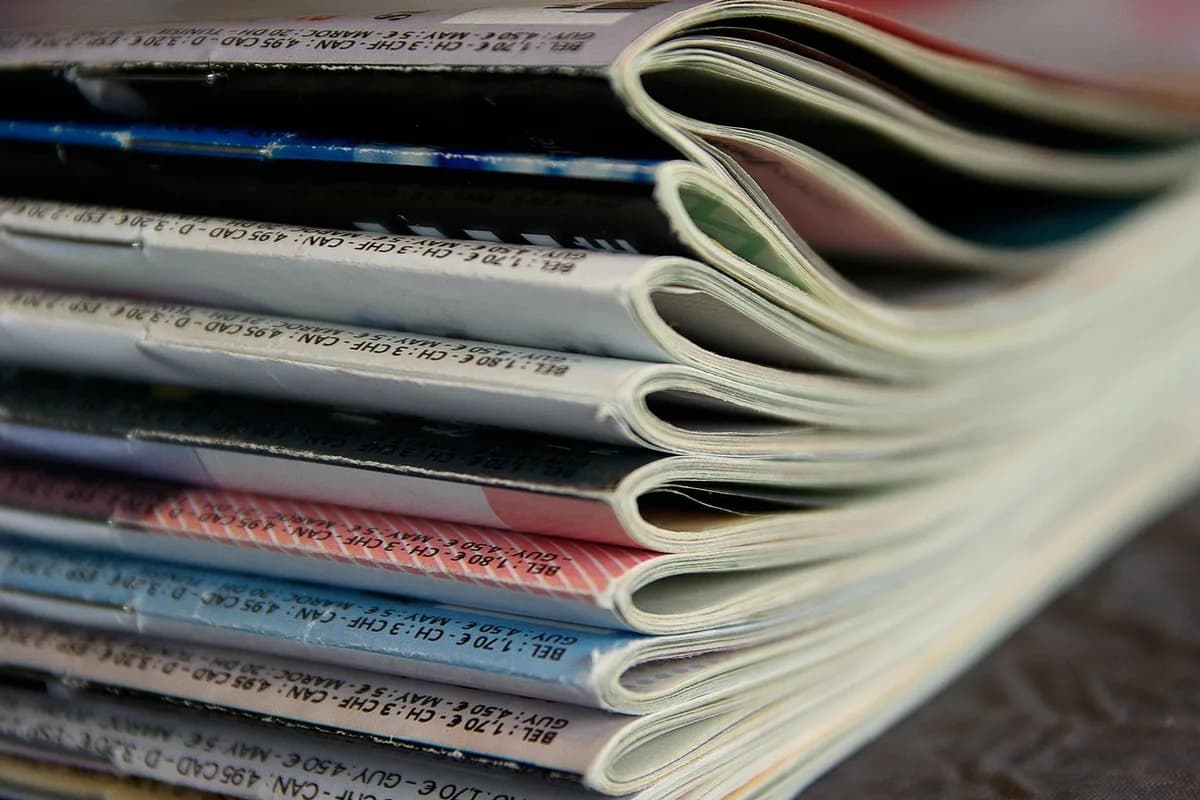
Scientists, faculty and other specialists.
Evaluated by scholars before publication.
Abstract, methods, results, references.
Every claim traced to a source.
Write your paper in Evernote. The AI Assistant builds your table, finds the exact line and plans the work.
Scholarly articles name their authors and their institutions. Popular articles may be by staff writers or unsigned.
Most research articles open with a short summary of the question, method and findings.
Research articles have sections such as Introduction, Method, Results and Discussion, with tables and charts.
A list of cited sources in a formal style is a strong sign of a scholarly article.
Check the journal's website for its review policy, or look it up in Ulrichsweb, which marks peer-reviewed journals as "refereed".
Sleep quality, duration, and consistency are associated with better academic performance in college students
npj Science of Learning (2019) 4:16 · https://doi.org/10.1038/s41539-019-0055-z
Kana Okano, Jakub R. Kaczmarzyk, Neha Dave, John D. E. Gabrieli, Jeffrey C. Grossman, with their institutions (MIT, Harvard Business School).
Wearable activity trackers were given to 100 students in an introductory chemistry class; 88 completed the study. Better quality, longer and more consistent sleep correlated with better grades.
Introduction, Results, Discussion, Methods, with figures of sleep against test scores.
A numbered list of earlier studies, cited in the text by superscript numbers.
Check the journal's "About" or author instructions page, or Ulrichsweb, for its peer review policy.
Both can be useful, but check your assignment for the types of sources it requires.
| Scholarly journal | Popular magazine or site | |
|---|---|---|
| Authors | Experts such as scientists, faculty and historians | Journalists, staff writers, bloggers |
| Before publication | Evaluated by peers (other scholars) | Edited in-house, or not at all |
| Audience | Specialists and students in the field | General readers |
| Format | Abstract, literature review, method, results, conclusions | Varies |
| Citations | References in an academic style | Few or none |
| Purpose | Communicating research findings | News and entertainment |
UC Berkeley Library, "Scholarly & Popular Sources"; Cornell University Library, "Distinguishing Scholarly from Non-Scholarly Periodicals".
4.4
2,100+ reviews on G2

4.4
8,200+ reviews on Capterra

4.4
73,000+ reviews on App Store

248M
Registered users

A journal whose editor sends each submitted article to other researchers in the same field, who judge the quality of the research, the data and the conclusions before it is accepted.
Not every scholarly journal is peer reviewed. Even in peer-reviewed journals, items such as editorials and book reviews may not be peer reviewed.
Journals publish research by experts, with citations, for specialists. Magazines publish articles by journalists for general readers, without formal citations.
Articles written by researchers that report original research, review earlier research, or present theory, with full references.
Search your library's databases and filter for peer-reviewed articles, or search Google Scholar. Your librarian can point you to the databases for your field.
Some are open access and free for everyone. Many others need a subscription, which your school library may pay for.
Keep the article, the journal page and your notes in one notebook. The AI Assistant helps you compare the features that mark a scholarly source.
Ask the AI Assistant for a table of the authors, abstract, sections and references. It reads the PDF and adds the table to your note.
Ask where the journal describes its review process. The Assistant answers with a link to the note, and the matching words are highlighted on the page.
Ask it to add a task for each check, with due dates before your assignment. You get a reminder for each one.
Save your articles and PDFs in one notebook, let the AI Assistant build the table you need, and get a task for each step.
Start for free