Compress PDF to 200kb

About us
English
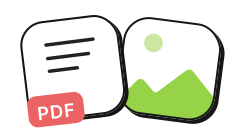
Compress PDF to 200kb
Quickly compress pdf to 200kb and preserve quality for easy sharing with Evernote
or drag and drop a file
Supports images and PDFs (max 100MB)
By using the product, you agree to our Terms of Service and have read our Privacy Policy.
Trusted by Millions Worldwide
4.4
2,100+ reviews on G2
4.4
8,200+ reviews on Capterra
4.4
73,000+ reviews on App Store
248M
Registered Users
5B
Notes Created
2M
Notes Created Daily






Frequently Asked Questions
Compress PDF to 200kb means reducing the file size of a PDF so it is approximately 200 kilobytes. The goal is to make the file easier to send, upload, or store while keeping the document readable. Evernote's online compressor focuses on shrinking images and optimizing content so most PDFs remain usable after reduction.
Shrinking a PDF to 200kb helps when you need to attach documents to emails, meet upload limits, or save space on devices. Smaller PDFs upload faster and are simpler to share over mobile networks. Evernote provides an online tool to help compress files while maintaining layout and readability so sharing and storing documents becomes more convenient.
The compressor aims to keep image quality balanced with reduced file size. For many documents, photos and graphics remain clear enough for reading and viewing after compression. In cases where a large reduction is required, some image detail may be reduced to reach the 200kb target. Evernote's tool is designed to retain the overall look and function of your PDF.
Most modern compressors prioritize preserving text clarity and font rendering. Text typically remains crisp and searchable after compression. If a PDF contains embedded or unusual fonts, the visual appearance should remain intact, though extreme size reductions can occasionally alter rendering. Evernote's approach focuses on maintaining text readability and layout while shrinking file size.
Scanned PDFs are image-based and can often be reduced significantly by optimizing image resolution and compression. Results vary depending on the original scan quality: high-resolution scans have more room for reduction, while low-resolution scans may reach limits sooner. Evernote's online compressor works with scanned documents to lower file size while keeping the content legible.
The compressor works to preserve document layout, including text flow, margins, and page order. Most standard layouts remain unchanged after compression. However, extremely aggressive size reduction could slightly alter image placement or visual details in rare cases. Evernote aims to keep the overall layout and structure intact so documents remain usable and professional-looking.
You can compress a wide range of PDFs: text documents, reports, scanned pages, presentations saved as PDF, and image-heavy files. Some PDFs with complex interactive features or embedded multimedia might not shrink as much, but standard content types usually compress well. Evernote's tool supports common PDF files for convenient size reduction and sharing.
The ability to compress multiple PDFs in one action depends on the tool's batch-processing features. Evernote's online compressor focuses on fast, easy file reduction and may offer the option to handle several files sequentially or in a single session. If you have many files, compressing them one by one or using an available batch feature can save time and ensure consistent results.
Yes — Evernote's online tools and mobile-friendly pages let you compress PDFs from smartphones and tablets. Mobile compression is useful when you need to email or upload a document while on the go. Performance and speed depend on your device and connection, but the process is designed to be simple and accessible from mobile browsers or Evernote apps where supported.
Password-protected PDFs require the password to be removed or provided before the file can be processed by most compressors. This is to ensure authorized access and avoid altering protected content. If you have the right to modify the document, unlock it first and then use Evernote's compressor to reduce the file size while preserving content and layout.
Evernote's workflow encourages previewing compressed files so you can confirm readability and layout before sharing. A preview helps you check images, text, and pagination after compression. If the result doesn't meet your needs, you can adjust compression settings or try another run. Previewing ensures the compressed PDF meets your standards for content and presentation.
Many PDF compressors provide options such as image quality levels, resolution targets, or presets for email and web sharing. Evernote's tools focus on giving users control to balance quality and size, letting you choose settings that prioritize clarity or maximum reduction. Adjusting these options helps tailor results to your needs, whether for readability or minimal file size.
When you compress a PDF, it's a good practice to keep a copy of the original file in case you need the highest-quality version later. Evernote encourages users to save originals before processing. Depending on your workflow, you can store the original in Evernote or locally and keep the compressed copy for sharing or uploading.
Upload limits can vary by platform and browser. Very large PDFs may take longer to upload before compression begins. Evernote's online compressor handles common file sizes smoothly, but extremely large originals might need a steady connection or a desktop to upload. If an upload fails, try smaller batches or a stable network to complete the compression process.
Highly complex PDFs with many high-resolution images, embedded fonts, or multimedia content may not always compress down to exactly 200kb without noticeable quality loss. The final size depends on the original content and how much detail can be reduced while retaining usability. Evernote's tool strives to reduce size while keeping documents functional and presentable, but results vary by file complexity.