
4.4
2,100+ reviews on G2

Growing a rose from a cutting means taking a healthy stem from this year's growth that has just finished flowering, about 8 inches long for a hybrid tea, removing the lower leaves, dipping the base in rooting hormone and planting it in moist potting mix under a humid cover. Roots take about 6 to 8 weeks. Four things matter:
Propagating patented roses is not allowed. Check the variety first.
Green, slightly flexible wood that just flowered roots best.
A bottle or bag keeps moisture in while the cutting has no roots.
Strong direct sun stresses a cutting. Bright shade is ideal.
Keep a garden journal in Evernote. Log what you see, get a reminder, and ask what worked last season.
New rose varieties are often protected by a plant patent, which bars propagating them. Older roses and miniatures are a good place to start: miniatures usually root well.
With pruners sterilized in alcohol, cut a healthy, green, slightly flexible stem from this year's growth: about 8 inches for a hybrid tea, 4 to 5 inches for smaller roses, ideally with 4 or 5 leaf nodes. Put the base in water right away.
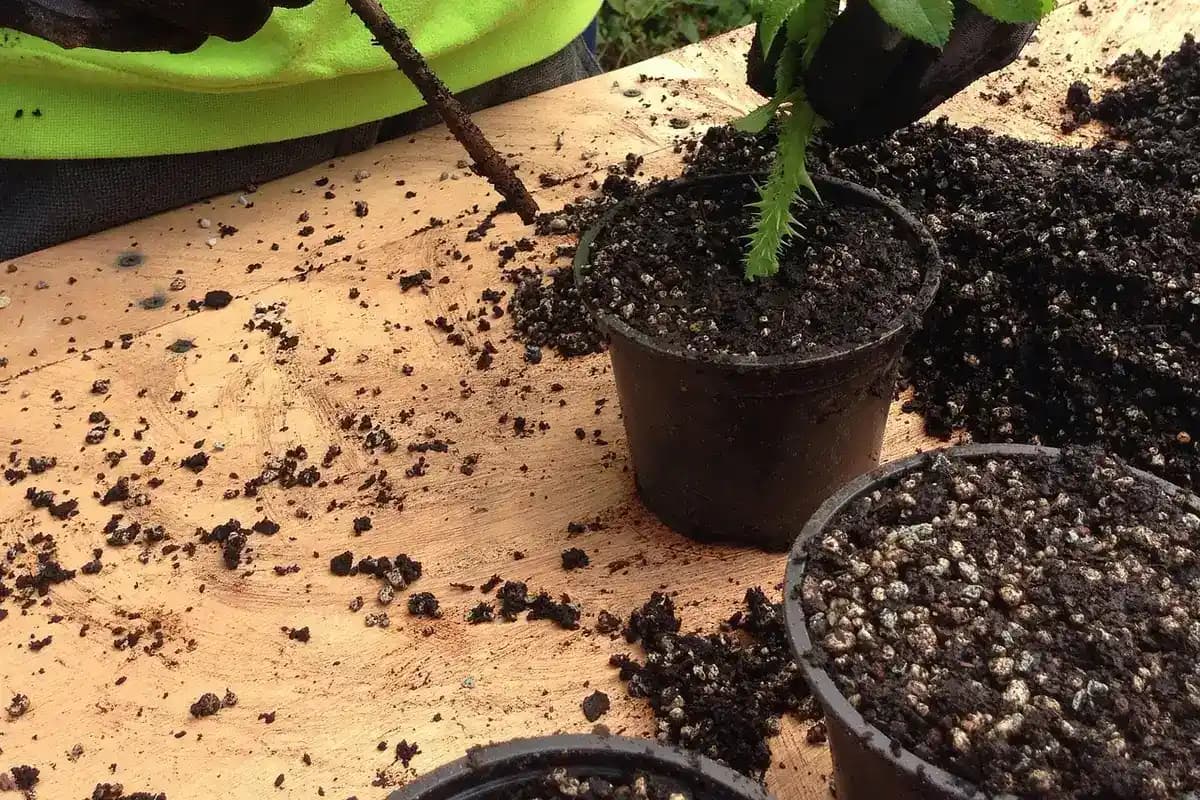
Fill a clean pot with seed-starting mix with plenty of perlite or vermiculite, or a loose soilless mix. Water it until evenly moist, not wet, and make a hole 3 to 4 inches deep.
Cut the base straight across just below a node and the top at an angle above the 4th or 5th node. Remove the leaves from the bottom three nodes and halve any large leaves left at the top.
Dampen the base, dip it in rooting powder, and set it in the hole with the bottom two nodes buried. Firm the mix around it and label it.
Cover with a 2-liter bottle with the bottom cut off and the cap removed, or a plastic bag. Keep it in bright light out of direct sun, and never let the mix dry out. Water from below.
Roots may form in about 6 weeks, often 8. When new growth starts, remove the cover and care for it like any young plant. It may need protection in its first winter.
| Date | What I saw | What I did |
|---|---|---|
| 2Jun 20 | Stem just finished flowering, 5 nodes | Cut 8 in, into water at once |
| 3Jun 20 | Seed mix with perlite, evenly moist | 3 pots, 3 to 4 in holes |
| 4Jun 20 | Bottom 3 nodes bare | Top leaves cut in half |
| 5Jun 20 | Rooting powder on | 2 nodes buried, labeled |
| 6Jun 21 | North window, no direct sun | Soda bottle covers on |
| 7Aug 15 | New leaves on 2 of 3 | Covers off: rooted |
Check for roots by tugging gently: resistance means roots (Clemson HGIC).
One note per plant or bed. Copy it, or save it to your Evernote account and add a line every time you are in the garden.
Plant: Rose cutting · Variety: [name]
Planted: [date] · Spot: [bed, pot or row]
Sun: [hours a day] · Water: [how much, how often]
Expect: [first flowers, harvest or bloom date]
Log:
[date]: [what you saw], [what you did]
[date]: [what you saw], [what you did]
Next year: [what to change]
4.4
2,100+ reviews on G2

4.4
8,200+ reviews on Capterra

4.4
73,000+ reviews on App Store

248M
Registered users

Yes. Take a healthy stem from this year's growth that has finished flowering, remove the lower leaves, dip it in rooting hormone and keep it humid in moist potting mix. Some roses root more easily than others: miniatures usually succeed.
About 6 to 8 weeks, according to UC Master Gardeners. Remove the cover once new growth starts.
It is not essential, but it gives better results.
UC Master Gardeners describe rooting in moist potting mix under a cover. Keep the cut stem in water only until you plant it.
From a stem of the current year that has just finished flowering. Clemson Extension calls summer the ideal time for stem cuttings. Old, woody stems are hard to root.
No. Many newer roses are covered by a plant patent, which prohibits propagating them, even for your own garden. Check the variety first.
Keep a garden journal in a Garden notebook, with one note per plant or bed and a dated log in a table.
Tell the AI Assistant what happened in a few words, such as "mix still moist, watered from below". It adds a dated row to the log table in your note.
Ask for a reminder counted from a date in your log, such as "Remind me to check for roots 8 weeks after I took the cuttings". The Assistant reads the date and sets the reminder on the note.
Next year, ask "How long did my rose cuttings take to root last year?" The AI Assistant reads all your garden notes and answers from them.
Log what you see in a few words, get a reminder at the right time, and ask your journal what worked last season.
Start for free