
4.4
2,100+ reviews on G2

You improve gut health mostly through what you eat every day: plenty of fiber from vegetables, fruit, beans and whole grains feeds the bacteria in your large intestine, which ferment it into short-chain fatty acids your body uses. Four habits help:
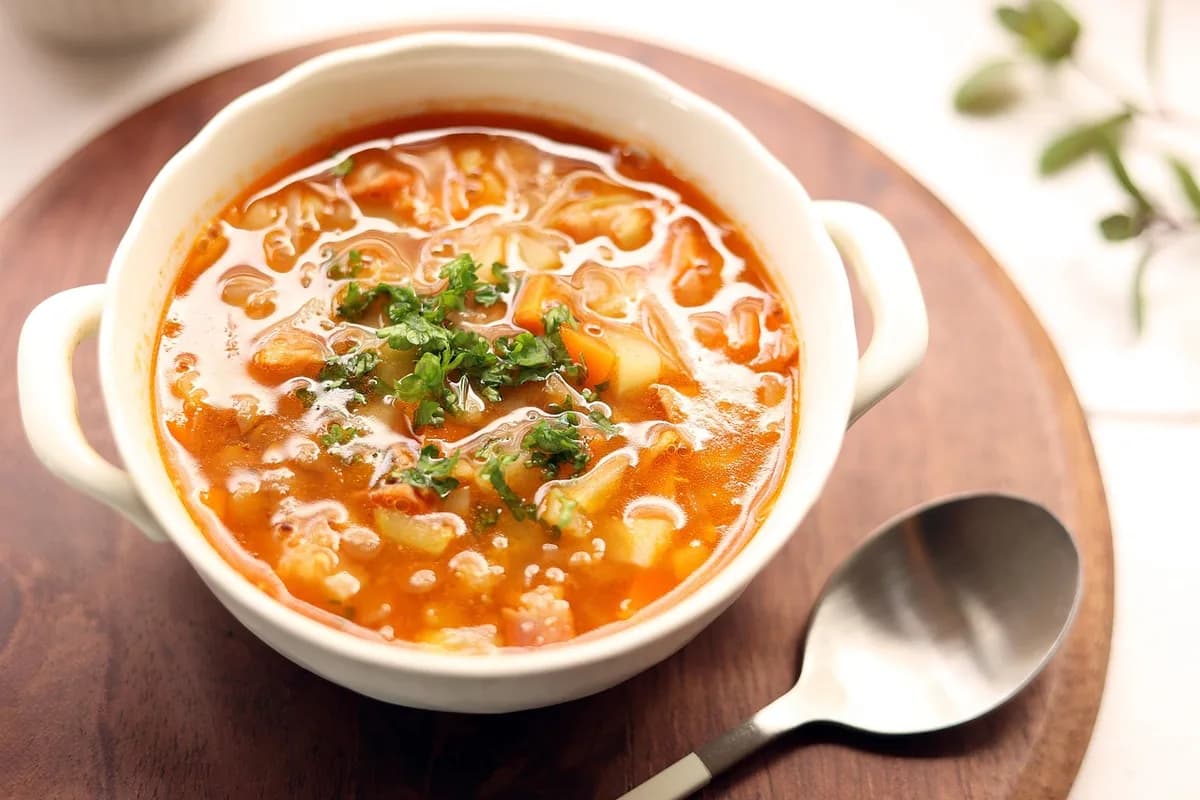
Beans, lentils, whole grains, vegetables and fruit.
Different plant foods feed different bacteria.
Yogurt and kefir are easy to add.
Less added sugar, per the Dietary Guidelines.
Plan your week in Evernote. Start from your template, then let the AI Assistant add a bean dish twice.
Fruit at breakfast, vegetables at lunch and dinner. The Dietary Guidelines recommend vegetables of all types, including beans, peas and lentils.
Oats, brown rice, whole-wheat bread and pasta. The 2025-2030 Dietary Guidelines advise prioritizing fiber-rich whole grains.
They are among the richest fiber sources and cost little.
Harvard's Nutrition Source explains that gut bacteria ferment fibers that reach the large intestine, making short-chain fatty acids that the body uses.
Plain yogurt or kefir with fruit is a simple start.
Add fiber a little at a time. If you have a digestive condition, ask your doctor or a dietitian before changing your diet.
| Day | Dinner | Plants in it |
|---|---|---|
| 3Mon | Lentil and vegetable soup | Lentils, carrots, spinach |
| 1Tue | Black bean tacos with slaw | Beans, cabbage, peppers |
| 2Wed | Salmon, brown rice, broccoli | Brown rice, broccoli |
| 3Thu | Chickpea curry | Chickpeas, tomatoes, onion |
| 2Fri | Whole-wheat pasta with vegetables | Wheat, zucchini, tomatoes |
| 5Breakfast all week: oats, berries and plain yogurt | ||
About 15 different plant foods across the week. A general example, not medical advice.
Copy it, or save it to your Evernote account and start a new week from it every Sunday.
Week of [date]
Mon · Breakfast: [ ] · Lunch: [ ] · Dinner: [ ]
Tue · Breakfast: [ ] · Lunch: [ ] · Dinner: [ ]
Wed · Breakfast: [ ] · Lunch: [ ] · Dinner: [ ]
Thu · Breakfast: [ ] · Lunch: [ ] · Dinner: [ ]
Fri · Breakfast: [ ] · Lunch: [ ] · Dinner: [ ]
Sat · Breakfast: [ ] · Lunch: [ ] · Dinner: [ ]
Sun · Breakfast: [ ] · Lunch: [ ] · Dinner: [ ]
Cook ahead on Sunday: [what to make in bulk]
Groceries: [items, by store section]
4.4
2,100+ reviews on G2

4.4
8,200+ reviews on Capterra

4.4
73,000+ reviews on App Store

248M
Registered users

High-fiber plant foods such as beans, lentils, whole grains, vegetables and fruit, plus fermented foods like yogurt. Variety matters.
Start adding fiber today: a fruit at breakfast, beans at lunch, vegetables at dinner. Lasting change comes from the everyday pattern, not one food.
Yes. Harvard's Nutrition Source explains that fibers reach the large intestine, where bacteria ferment them into short-chain fatty acids.
Ask your doctor or a dietitian. Food sources like yogurt are an easy first step.
A diet low in fiber and high in refined, sugary foods. Diet, genes, environment and medicines all play a role.
If you have ongoing pain, bleeding, weight loss or changes in your bowel habits. Diet changes don't replace a diagnosis.
Keep your gut-friendly meal plan and the recipes you cook in one Evernote notebook.
Start the week from your gut-friendly meal template, with each day as a date that counts from when you create the note. Ask the AI Assistant to start next week from it.
Ask the Assistant to fill the dinners from your Recipes notebook with a bean or lentil dish on two nights. It writes each dish into the table.
Share the gut-friendly meal plan with your household. Everyone edits the same note at the same time.
Start from your template, let the AI Assistant fill the dinners with beans and vegetables, and share the plan.
Start for free