
4.4
2,100+ reviews on G2

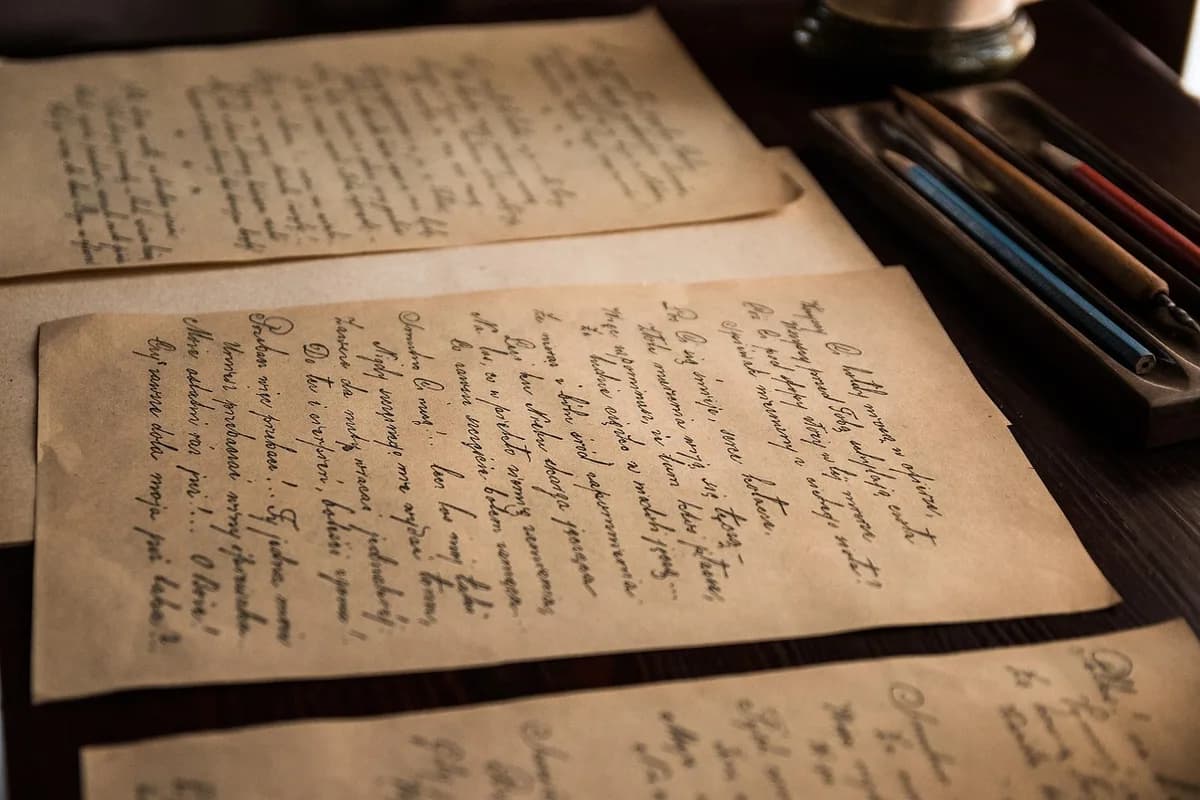
A biography is a true account of a person's life written by someone else, built from research such as records, interviews and the person's own writing. A good one rests on four things:
One person, and why their life is worth a reader's time.
Primary sources first: letters, records, interviews.
Dates and places checked, so the story holds together.
What the life shows, not only what happened.
Write your book in Evernote. The AI Assistant turns your notes into an outline and catches story slips.
Pick someone whose life you want to understand. For a school assignment, check the length, the number of sources and which kinds are allowed before you start.
Encyclopedias and biographical dictionaries give you the basic facts and name variations. Note what you know and what you still need.
Letters, diaries, birth and death records, newspaper articles from the time, and interviews with people who knew the person. They carry more weight than later summaries.
List every date and event with its source. Where two sources disagree, note both and look for a third.
Decide what the life shows: a struggle, a turning point, a contradiction. That theme tells you which events to tell in detail and which to summarize.
You can run the biography in time order, opening with a moment that shows the person at their most revealing, then going back to the beginning.
Keep a reference for every fact and quote. Use the citation style your teacher or publisher asks for.
Use both kinds of source, and know which is which.
| Type | Examples | Use it for |
|---|---|---|
| Primary sources | Letters, diaries, records, photos, interviews, the person's own writing | Facts, quotes and details from the time |
| Secondary sources | Earlier biographies, articles, histories | Context and other writers' interpretations |
| Reference sources | Encyclopedias, biographical dictionaries | Basic facts and where to look next |
Research steps adapted from Cerritos College Library, "Biographical Research".
Copy it, or save it to your Evernote account and add a source to every line.
Subject: [name], [dates], [known for]
Name variations: [other spellings or names]
Reference sources: [source], [source]
Primary sources: [letters / records / interviews], where to find them
Timeline: [year]: [event] ([source])
Theme: [what the life shows]
Opening scene: [moment], source: [source]
4.4
2,100+ reviews on G2

4.4
8,200+ reviews on Capterra

4.4
73,000+ reviews on App Store

248M
Registered users

A biography is written about a person by someone else. An autobiography is the story of a person's life told by that person.
You can open with a revealing moment from the person's life, then go back to their birth or childhood and follow the life in order.
The main facts of the life (birth, family, education, work, key events, death if relevant), what the person did that matters, and the evidence for each. A good biography also says what the life shows.
Your teacher sets the length and the number of sources. Check the assignment before you start researching, so you collect enough without drowning in material.
Check with the publisher before you use private letters or photos, and ask the person or their family for permission.
Interview them or relatives, collect letters, photos and records, and build a timeline. Record interviews so you can quote accurately later.
Keep one notebook for the subject: scans of letters and records, interview recordings and one note per chapter.
Keep scans of letters and records, interview recordings and one note per chapter in one notebook. Ask the AI Assistant for a 12-chapter outline from them, with a life timeline.
Ask the Assistant when a person was appointed, born or married, and which notes say so. It cites each source, so you can settle a date that two notes give differently.
Ask it to add a task such as "write 500 words every weekday at 7 AM". The task repeats and reminds you each morning.
Outline from your own notes, check any detail across every chapter, and get a reminder to write each day.
Start for free