
4.4
2,100+ reviews on G2

A to-do list is a written list of the tasks you need to do, each one small enough to finish and ideally with a date. A list that works does four things:
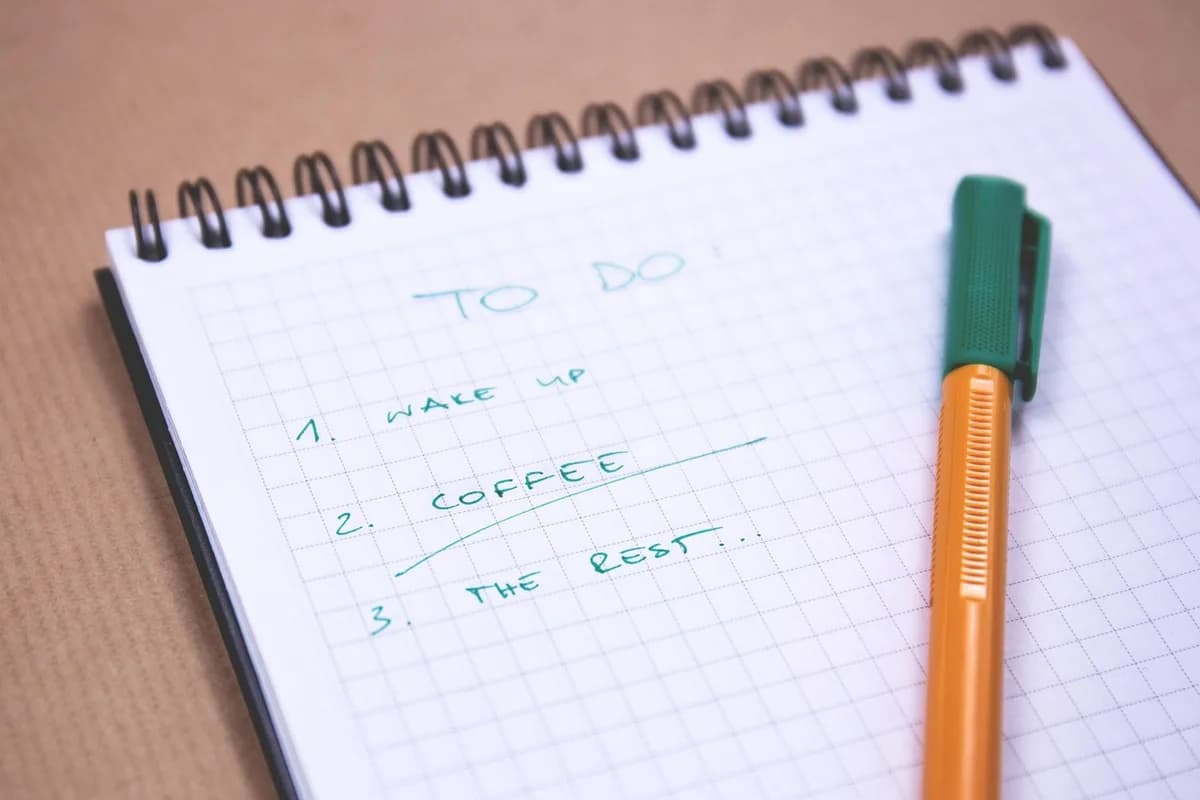
One list in one place, so nothing lives only in your head.
"Call the dentist", not "dentist", so each task is a clear action.
Every task with a deadline gets its due date.
A few tasks to do first, so the long list does not stall you.
Keep your list in Evernote. The AI Assistant turns a brain dump into tasks with dates and priorities.
Set aside a few minutes and list every task, errand and loose end you can think of, big or small, in any order.
Rewrite vague items as the next physical step, starting with a verb. "Car" becomes "Book an oil change online". Split anything that takes more than one sitting into smaller tasks.
Give every task with a real deadline its date: bills, forms, birthdays, appointments. Leave the others undated rather than inventing deadlines.
Ask two questions of each task: does it have to happen soon, and does it matter? Do the tasks that are both first, schedule the important ones, and drop or hand off what is neither.
Choose the three tasks that would make today a good day if they were the only ones you finished. Do them before anything else on the list.
Put everything on one list you can reach from your phone and your computer.
Tick off what you finished, move what you did not, and write tomorrow's top 3. In a 2018 sleep lab study, people who wrote a specific to-do list for five minutes at bedtime fell asleep faster than people who wrote about tasks they had already done.
One list for the whole week, with the top 3 picked the evening before.
Start with a plain list. These methods help when the list gets long or everything feels urgent.
| Method | How it works | Best for |
|---|---|---|
| Simple checklist | Every task on one list, ticked off as you go. | Short lists and errands. |
| Eisenhower matrix | Sort each task by two questions: is it urgent, and is it important? Do the urgent and important ones first, schedule the important ones, and hand off or drop the rest. | Days when everything feels urgent. |
| Ivy Lee method | At the end of each day, write down the six most important tasks for tomorrow, in order. Work on them one at a time, top to bottom. | Focusing on a few big things. |
| Bedtime list | Spend five minutes before bed writing a specific list of what you need to do in the next few days. | Clearing your head at night. |
Ivy Lee method as described by James Clear. Eisenhower matrix from Quote Investigator. Bedtime list from Scullin and colleagues, Journal of Experimental Psychology: General, 2018.
Fill it in at the end of the day for tomorrow. Copy it, or save it to your Evernote account and start each day from it.
Date: [tomorrow]
Top 3 (do these first)
1. [most important task, starting with a verb]
2. [task]
3. [task]
Also today
[task] · due [time]
[task] · due [time]
Waiting on
[what] from [who], asked on [date]
Later this week
[task] · [day]
Done today
[what you finished]
4.4
2,100+ reviews on G2

4.4
8,200+ reviews on Capterra

4.4
73,000+ reviews on App Store

248M
Registered users

Every task you have committed to, written as an action that starts with a verb, with a due date where there is a real deadline. Add a priority or a top 3 for the day, so you know where to start.
The Ivy Lee method caps the daily list at six tasks in order of importance. Keep the list short enough to finish, and move the rest to another day.
Either works if you keep one list and check it every day. An app helps when tasks need due dates and reminders, or when you want the same list on your phone and your computer.
Ask whether each task is urgent and whether it is important. Do the tasks that are both first, give the important but not urgent ones a date, and hand off or drop the rest. This is the Eisenhower matrix.
Break big items into next actions, pick a top 3 each day, and move the rest to a later date instead of carrying them over every day.
It can. In a 2018 study at Baylor University, 57 young adults who spent five minutes writing a to-do list at bedtime fell asleep faster than those who wrote about tasks they had finished. The more specific the list, the faster they fell asleep.
Unfinished tasks keep coming back to mind. Studies by Masicampo and Baumeister found that making a specific plan for an unfinished goal stopped those intrusive thoughts, even before the goal was done.
Try the evening before. You know what is left from today, and you start the morning with a list instead of deciding what to do first. Review it again for a minute when you start work.
Keep your tasks in Evernote notes, so every to-do sits next to the notes it belongs to and shows up in one Tasks view.
Type everything on your mind into one note. Ask the AI Assistant to turn it into tasks, and it adds a due date where the note has one and a priority for each task.
Open the Tasks view to see the tasks from all your notes, grouped by Next 7 days, Future and No due date. Filter by priority to see what matters now.
Ask the Assistant to remind you the day before each due date. Evernote shows a notification when each reminder comes up.
Write down everything, let the AI Assistant turn it into tasks with dates, and see what is next in one place.
Start for free