
4.4
2,100+ reviews on G2

Studying anatomy for art means learning the proportions, skeleton and major muscles of the body well enough to draw a believable figure from any angle, by drawing from references and life. Work through it in this order:
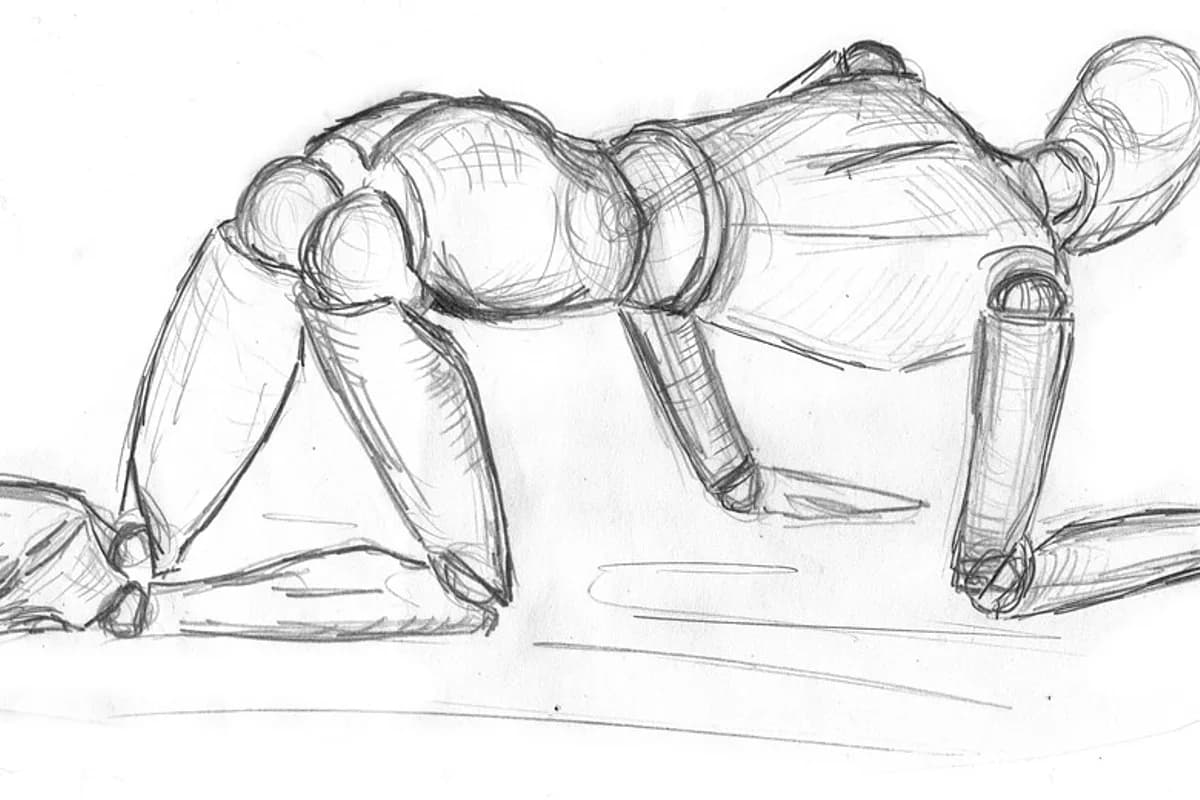
Catch the pose with a few lines before any detail.
Measure the body in head lengths.
Find the bones you can see under the skin.
Draw the ribcage and pelvis as boxes and eggs.
Keep your practice in Evernote. Photograph each study, log it, and see your practice add up.
Draw the line of action, the main curve of the pose, in a few seconds. Then add the tilt of the shoulders and hips. Anatomy goes on top of a pose that already feels alive.
A common drawing canon makes an adult figure about seven to eight heads tall, with the torso about two and a half heads and the shoulders about twice the height of the face. Use the head as your unit and check each part against it.
Some bones show under the skin and anchor the drawing: the collarbones, the bottom of the ribcage, the hip bones, the kneecaps and the ankle bones. Mark them first.
Draw the ribcage as an egg or a box, the pelvis as a box and the head as a ball with a jaw. Turn these forms in space before you add muscles.
Spend a week on one part, such as the arm or the torso. Copy a clear anatomy reference, then draw the same part from a photo or from life without looking at the reference.
Use timed poses from a life drawing class or a pose website. Short poses train gesture; longer ones give time for proportions and landmarks.
Using an eight-heads canon for a standing adult, counted from the top of the head. Real people vary, so treat these as guides.
| Head lengths down | Lands near |
|---|---|
| 1 | The chin |
| 2 | The chest |
| 4 | The pelvic region, the middle of the body |
| 8 | The soles of the feet |
Head-length landmarks from Drawingforall.net and Wikipedia: an adult figure is about seven to eight heads tall, the midpoint is around the pelvic region, and the legs are about three and a half to four heads long.
One entry per session. Copy it, or save it to your Evernote account and add a line each time you practice.
Date: [date] · Minutes: [how long you practiced]
Warm-up: [scales, stretches or drills, about 5 minutes]
Worked on: [piece, song or skill] · Part: [bars, verse or exercise]
Measure: [tempo, number of clean run-throughs, or pages filled]
Fix next time: [one thing, as specific as you can]
Recording or photo: [voice note or photo of today]
4.4
2,100+ reviews on G2

4.4
8,200+ reviews on Capterra

4.4
73,000+ reviews on App Store

248M
Registered users

Start with gesture drawing and proportions in head lengths, then learn the landmarks you can see under the skin. Add muscles one region at a time once the big forms feel right.
A common canon uses about eight heads for an idealized adult, with the middle of the body at the crotch. Real people vary, so measure your model or reference.
No. Learn the big masses, the landmarks and the muscles that change the surface shape, like the shoulder, chest and thigh muscles. Detail comes later.
A quick drawing that catches the pose and movement in a few lines, in one to three minutes. It keeps figures from looking stiff.
Both. Life drawing shows form and depth best. Photos and pose references let you practice any time and study poses a model cannot hold.
It is ongoing practice, not a single course. Work through one region a week with daily gestures, and compare old and new pages to see your progress.
Keep an art notebook with one note per session and one practice log note with a table.
Open a note for today, write which region and poses you drew, and add a photo of the page from your phone.
Ask the AI Assistant to add today's session to your log note. It reads today's note and adds a row with the date, what you worked on, the minutes and the region you studied.
Ask the Assistant to chart how many figures you drew each week from the log. It adds a chart to the top of the note, so you can see the trend week by week.
Record or photograph each practice session, log it in one table with the AI Assistant, and chart your progress week by week.
Start for free