How to split PDF into two

About us
English

How to split PDF into two
Quick, browser-based guide on how to split pdf into two files using Evernote’s tools
or drag and drop a file
Supports PDF files (max 100MB each, up to 10 files)
By using the product, you agree to our Terms of Service and have read our Privacy Policy.
Trusted by Millions Worldwide
4.4
2,100+ reviews on G2
4.4
8,200+ reviews on Capterra
4.4
73,000+ reviews on App Store
248M
Registered Users
5B
Notes Created
2M
Notes Created Daily











Frequently Asked Questions
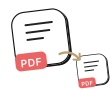
Splitting a PDF into two means dividing one PDF file into two separate files. You can split by page number, by a range of pages, or by logical sections such as chapters or form groups. The result is two distinct PDF files that each contain a subset of the original pages. Evernote’s browser-based tools let you choose page ranges or custom groups so you can keep the pages you need in each new file.
Splitting a PDF into two files helps simplify sharing, reduce file size for specific recipients, or isolate content for focused review. For example, you might separate sensitive pages from general material, extract a chapter to send to a colleague, or split a long report into manageable sections. Using Evernote’s web tools, you can divide documents quickly and keep the resulting files organized alongside your notes and related materials.
Splitting a PDF streamlines workflows by making it easier to distribute targeted content, annotate smaller files, and collaborate with others on relevant sections. Instead of handling a large, multi-section document, you work with concise files that match task needs. Evernote helps by keeping split files accessible within your notes, so you can attach, annotate, or reference each piece within a project, reducing friction when sharing or reviewing specific parts of a document.
Yes — you can split PDFs online with browser-based tools, including those available through Evernote. The typical process is to upload or open the PDF in your browser, select the pages or split points, and export each resulting file. Online splitting avoids installing extra software and works across devices. Evernote’s web tools integrate with your notes so you can save split files directly where you organize related information.
You can split scanned or image-based PDFs the same way you split text-based documents: by selecting page ranges or specific pages to export into separate files. Splitting does not require the PDF to have selectable text. If you want searchable or editable content afterward, consider using OCR tools before or after splitting; Evernote supports attaching or storing split files alongside searchable notes, helping you keep scanned pages organized.
Yes, splitting a PDF into two typically preserves the original page content and quality because the tool extracts pages without re-rendering or recompressing them. Most browser-based splitters, including Evernote’s web tools, export pages as they appear in the original PDF. If you need to ensure exact fidelity, check export settings and preview the output files. Storing split files in Evernote keeps the original visuals intact within your notes.
A common step-by-step approach is: 1) Open the PDF in your browser or upload it to the tool, 2) Choose the split option, 3) Specify where to divide the document (page number or ranges), 4) Preview the two resulting files, 5) Export or save each file. Evernote’s browser tools follow similar steps and let you save split PDFs back to your notes or download them to your device, keeping the process straightforward.
To split into custom groups, identify the exact page ranges for each new file (for example, pages 1–5 and 6–end). In the splitting tool, enter those ranges or use a visual page picker to select pages for the first file, then repeat or select remaining pages for the second file. Many tools, including Evernote’s browser workflow, let you preview selections so you can confirm the groups before exporting or saving the new PDFs.
In Evernote’s browser interface, open or attach the PDF you want to split, choose the PDF actions menu and pick the split option. Select the page numbers or use the page thumbnails to set the split point — for example, pages 1–2 and the rest. Preview each output, then export or save the two files back into your notes or download them. This keeps the split files alongside related project content for easy reference.
Most split operations produce standard PDF files, preserving original formatting and layout. Some tools may also offer options to export selected pages as images (JPEG, PNG) or as text if OCR is applied afterward. With Evernote, the primary output is PDF, which integrates cleanly with notes and attachments. If you need another format, you can export the split PDF and convert it using additional conversion tools or image export options.
Annotations and form fields are generally preserved when you split a PDF, because splitting typically extracts pages without removing embedded content. Comments, highlights, and form objects that are present on the selected pages should appear in the resulting files. However, behavior can vary by tool and file complexity, so it’s a good idea to preview the split files. Evernote’s workflow aims to maintain page content so your notes remain consistent with the original documents.
Yes, Evernote provides browser-based tools that let you split PDFs without installing extra software. You can open or upload a PDF in the web interface, choose a split action, set page ranges, and export the two resulting files. Because these tools are web-based, you can split files across devices and save the outputs directly into your notes, keeping related materials consolidated in one place for easy access and collaboration.
Evernote makes it straightforward to save split PDFs back into your notes or notebooks. After splitting, you can attach the new files to an existing note or create a new note that includes the split PDFs and any related text or tags. This keeps documents tied to projects, tasks, or reference material. Saving split files in Evernote helps you maintain context and makes it easy to search for or share those pages later.
Limits can depend on the tool and the environment you’re using, such as browser performance and account settings. Very large PDFs or extremely high page counts may take longer to upload, preview, or process in a browser. If you encounter performance issues, try splitting in smaller sections or using a faster connection. Evernote’s web tools are designed to handle common document sizes and integrate split files into your notes for organized storage.
Batch splitting multiple PDFs at once depends on the capabilities of the tool. Some workflows allow you to queue several files and apply a consistent split rule, while others focus on one file at a time. If you have many files to split, consider processing them in batches that match your desired page ranges. Evernote’s workflows are optimized for straightforward document management; for large batch jobs, you can split and then organize each result into notes or notebooks for easy tracking.