
4.4
2,100+ reviews on G2

Testing a smoke alarm means pressing its test button until you hear the loud alarm sound, which tells you the alarm and its battery work. The U.S. Fire Administration says to test the alarm monthly. Four things matter:
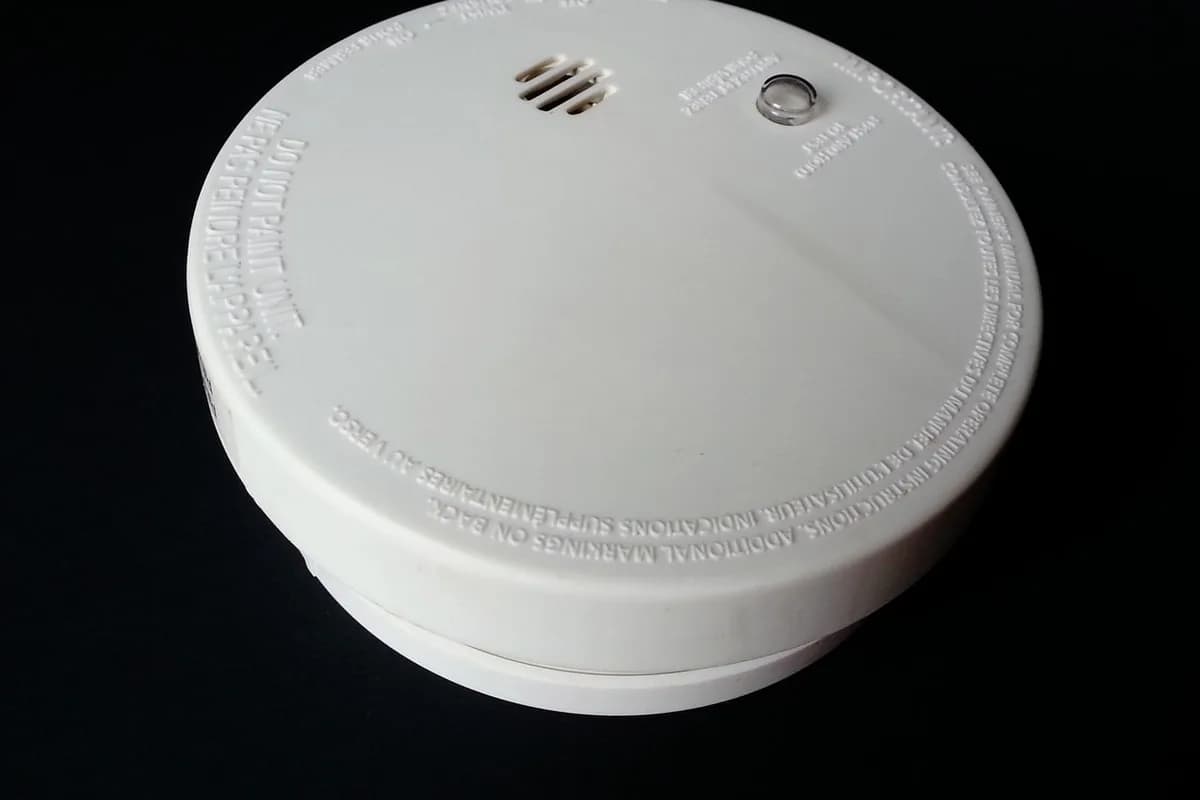
Press the test button on every alarm in the home, every month.
A loud "beep, beep, beep" means it works. Silence means it needs action now.
Alarms with replaceable batteries need a new battery at least once a year.
Replace the whole alarm 10 years after the date it was made.
Keep your chores in Evernote. Let the Assistant read the manual and set a repeating task.
The test is loud. Warn the people in the house, and use the moment to make sure everyone knows the sound and what to do when they hear it.
Stand on a sturdy step stool or use a broom handle. Press the test button and hold it for a few seconds, as the manufacturer's instructions say.
You should hear a loud "beep, beep, beep". If interconnected alarms are installed, every alarm in the home should sound together.
No sound: replace the battery, or replace the whole unit if it is over 10 years old. A chirp means the alarm needs attention; check the battery and the manual. On alarms with sealed 10-year batteries, follow the manufacturer's instructions.
Take the alarm down and look for the manufacture date. Replace any alarm that is 10 years old or older, even if it still sounds.
Repeat on every level, in every bedroom and outside each sleeping area. Note the date and any battery you changed, so you know when the next test and the yearly battery change are due.
The manufacture date is printed on the back of each alarm.
How the U.S. Fire Administration says to look after each kind.
| Alarm type | Test | Battery | Replace the alarm |
|---|---|---|---|
| Replaceable battery | Monthly, with the test button | At least once a year, or when it chirps | 10 years from the manufacture date |
| Sealed 10-year battery | Monthly, with the test button | Not replaceable | At 10 years, or per the manufacturer's instructions |
| Hard-wired with backup battery | Monthly, with the test button | Backup battery per the manufacturer | 10 years from the manufacture date |
Source: U.S. Fire Administration (FEMA), "Smoke Alarms".
One card per chore. Copy it, or save it to your Evernote account and keep it next to the manual.
Chore: Test the smoke alarms
How often: Once a month
Takes: [minutes]
You need: [supplies]
Steps:
1. [first step]
2. [next step]
Model number: [from the label on the appliance]
Last done: [date] · Next due: [date]
4.4
2,100+ reviews on G2

4.4
8,200+ reviews on Capterra

4.4
73,000+ reviews on App Store

248M
Registered users

At least once a month, using the test button, according to the U.S. Fire Administration. Test every alarm in the home, not just one.
Press the test button with the end of a broom handle. Hold it for a few seconds until the alarm sounds.
A chirp means the alarm needs attention; check the battery and the manual. Replace the battery right away. If the alarm has a sealed 10-year battery, replace the whole alarm according to the manufacturer's instructions.
Replace smoke alarms 10 years from the manufacture date printed on the back, according to the U.S. Fire Administration, even if they still sound.
Inside each bedroom, outside each sleeping area and on every level of the home, including the basement. Check the manufacturer's instructions for the best place in each room.
Ionization and photoelectric smoke alarms detect different types of fires. The U.S. Fire Administration recommends both types, or dual-sensor alarms that contain both.
For the best protection, the U.S. Fire Administration recommends interconnected alarms, so when one sounds they all sound. Interconnected alarms should come from the same manufacturer, or they may not work together.
Keep one note per chore in a Home notebook, and let tasks bring each chore back when it is due.
Attach the manual's PDF to the chore note and ask the AI Assistant how to test the alarms. It reads the PDF and adds the steps to the note as a checklist.
Ask the AI Assistant for a task that repeats on the first day of every month. It comes with a reminder on the day it is due.
Open the Tasks view to see what is due in the next 7 days and later. Assign a task to anyone you share the note with.
Keep the steps with the manual, let each chore repeat on its own, and see everything that is due in one list.
Start for free